OPEN NOW!
Contact your CVRC Service Coordinator to use Social Recreation funding.
How Sensory Play Supports Brain Development in Children
April 24,2026

Children learn about the world through their senses. Activities that involve movement, touch, sound, and interaction help children process information, develop cognitive skills, and build strong neural connections.
Brain development in children is closely linked to sensory experiences. Every time a child explores a new texture, movement, or environment, their brain forms and strengthens connections that support learning, memory, and behavior.
For many children, especially those with sensory processing needs, sensory play can significantly improve focus, coordination, emotional regulation, and overall cognitive development.
Sensory gyms such as We Rock the Spectrum Kid’s Gym – Clovis are designed to provide safe, engaging environments where children of all abilities can explore different sensory inputs while supporting healthy brain development.
Below are 8 ways sensory play supports brain development in children.
1. Strengthens Neural Connections
How sensory input impacts the brain
Sensory play stimulates multiple areas of the brain at once. When children engage in activities that involve movement, touch, and coordination, their brains work to process and respond to these inputs.
This repeated stimulation helps strengthen neural pathways, which are essential for learning and development.
Key benefits
· Improved information processing
· Better memory retention
· Enhanced learning ability
· Greater cognitive flexibility
Over time, stronger neural connections help children better understand and interact with their environment.
2. Improves Focus and Attention
Building attention through movement
Activities that involve sensory input help children learn how to focus on tasks and filter out distractions. Movement-based play, in particular, helps regulate attention and improve concentration.
Children who engage in regular sensory play often find it easier to stay engaged in both play and learning environments.
Key benefits
· Increased attention span
· Better task engagement
· Reduced distractibility
· Improved listening skills
These benefits carry over into school and daily routines.
3. Enhances Problem-Solving Skills
Learning through exploration
Sensory play encourages children to explore, experiment, and figure things out on their own. Whether navigating an obstacle course or trying a new activity, children learn how to make decisions and adapt.
This process strengthens critical thinking and problem-solving abilities.
Key benefits
· Stronger decision-making skills
· Improved logical thinking
· Greater adaptability
· Increased curiosity
Children become more confident as they learn how to approach new challenges.
4. Supports Emotional Regulation
How sensory play calms the mind
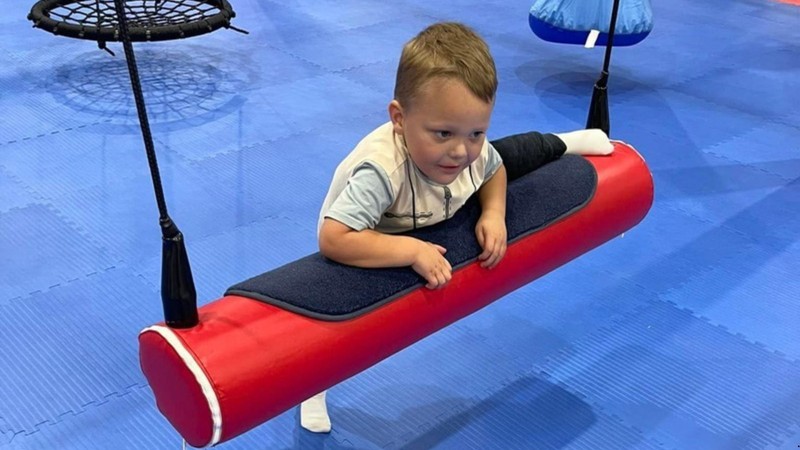
Sensory input plays a key role in helping children manage their emotions. Activities such as swinging, deep pressure play, or repetitive movements can have a calming effect on the nervous system.
These experiences help children feel more balanced and in control of their emotions.
Key benefits
· Improved emotional awareness
· Better self-regulation
· Reduced stress and anxiety
· Calming responses
For many children, sensory play becomes an effective way to manage overwhelming feelings.
5. Builds Body Awareness and Coordination
Understanding movement and space
Sensory activities help children understand how their bodies move and interact with space. This awareness is important for both physical and cognitive development.
As children engage in movement-based play, they learn how to control their actions and respond to their surroundings.
Key benefits
· Improved coordination
· Better spatial awareness
· Stronger motor planning
· Increased movement confidence
These skills are essential for everyday activities and learning.
6. Encourages Language Development
Connecting words with experiences
Sensory play often involves interaction, communication, and expression. As children explore new activities, they naturally begin to describe what they are doing, ask questions, and engage with others.
This helps strengthen language and communication skills.
Key benefits
· Expanded vocabulary
· Improved communication skills
· Better social interaction
· Stronger self-expression
Children learn to connect language with real-life experiences.
7. Stimulates Creativity and Imagination
Open-ended play and thinking
Open-ended sensory activities allow children to use their imagination and creativity. Whether playing with textures, building structures, or exploring movement, children create their own experiences.
This type of play supports flexible thinking and creative problem-solving.
Key benefits
· Increased imagination
· Independent thinking
· Exploration skills
· Confidence in self-expression
These abilities are important for both academic and personal growth.
8. Supports Overall Cognitive Development
Bringing all skills together
Sensory play combines multiple areas of development, including physical, emotional, and cognitive growth. By engaging different senses at once, children build a strong foundation for learning.
Regular sensory experiences help children process information more effectively and respond to the world around them.
Key benefits
· Stronger learning abilities
· Better focus and memory
· Improved emotional balance
· Enhanced problem-solving skills
These combined benefits support long-term brain development.
Why Sensory Gyms Support Brain Development
A structured environment for growth
A sensory gym provides more than just play equipment. It creates an environment where children can safely explore different sensory inputs while strengthening their brains and bodies.
Facilities like We Rock the Spectrum Kids’ Gym – Clovis are designed with specialized equipment that encourages movement, interaction, and exploration.
What these environments offer
· Safe and inclusive play spaces
· Equipment designed for sensory stimulation
· Opportunities for hands-on learning
· Activities that build confidence and independence
Most importantly, sensory gyms allow children of all abilities to develop essential skills in a fun and supportive setting.
Final Thoughts
Brain development is a critical part of early childhood growth. Sensory play provides children with experiences that help build strong neural connections, improve focus, and develop essential life skills.
Through activities that involve movement, interaction, and exploration, children can strengthen their cognitive abilities while gaining confidence in their environment.
Sensory gyms offer structured opportunities for children to engage in meaningful play that supports both learning and development.
At We Rock the Spectrum Kid’s Gym – Clovis, children can explore sensory activities, build important skills, and enjoy inclusive play designed to support every child’s growth.